
Driving an Automatic? Avoid These Costly Mistakes
Avoid costly transmission repairs by learning the most common automatic car driving mistakes and how to improve gearbox longevity.
 editor
Feb. 13, 2026: Automatic cars are becoming increasingly popular in India, thanks to the comfort and convenience they offer in heavy traffic conditions. With no clutch pedal and smoother gear shifts, automatics make daily commuting far less stressful.
However, their ease of use does not mean they are maintenance-free. Many drivers unknowingly adopt habits that can strain the transmission, reduce fuel efficiency and lead to expensive repairs over time.
Understanding how automatic transmissions work — and avoiding common mistakes — can significantly improve reliability and long-term durability.
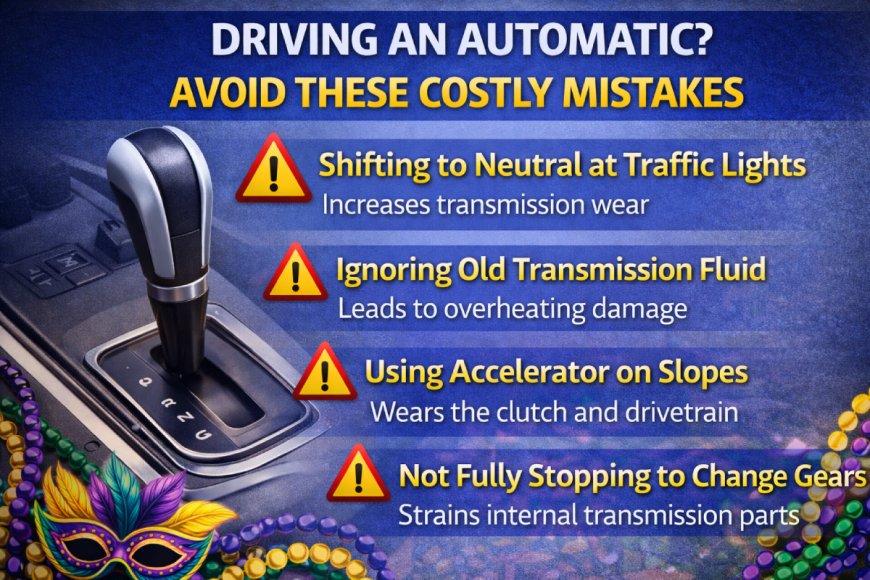
Shifting to Neutral at Traffic Lights
A common belief among drivers is that shifting to Neutral during long traffic stops saves fuel or reduces engine load. In reality, modern automatic transmissions are engineered to operate efficiently while stationary in Drive with the brake pedal applied.
Constantly switching between Drive and Neutral offers minimal fuel-saving benefits and may even increase wear on internal transmission components. Each gear change places mechanical stress on clutches and hydraulic systems inside the gearbox.
In most traffic conditions, it is better to keep the vehicle in Drive and simply apply the brakes. This allows the transmission to function as designed without unnecessary shifts.
Ignoring Transmission Service Intervals
Automatic transmissions rely heavily on transmission fluid for lubrication, cooling and smooth gear shifts. Over time, this fluid degrades and accumulates contaminants from daily operation.
Skipping recommended service intervals can lead to:
-
Rough or delayed gear shifts
-
Increased operating temperatures
-
Reduced transmission efficiency
-
Higher risk of overheating
Neglecting fluid changes for extended periods may cause internal components to wear prematurely, potentially resulting in major gearbox damage — one of the most expensive repairs in an automatic vehicle.
Following the manufacturer’s recommended maintenance schedule is essential to preserving transmission health.
Using the Accelerator to Hold the Car on Slopes
Many drivers use the accelerator to prevent the car from rolling backward on inclines. While this may seem convenient, it places unnecessary strain on the transmission and drivetrain.
In vehicles equipped with torque converters or automated clutch systems, holding the car in place using throttle input forces the gearbox to work against gravity while stationary. This generates excess heat and accelerates wear on clutch packs and transmission fluid.
Over time, this habit can lead to:
-
Jerky acceleration
-
Delayed throttle response
-
Increased transmission wear
Instead, use the brake pedal, hill-hold assist system or electronic parking brake. These features are specifically designed to prevent rollback without stressing mechanical components.
Engaging Drive or Reverse Before a Complete Stop
Another damaging habit is shifting from Drive to Reverse — or vice versa — before the vehicle has fully stopped.
When the wheels are still moving and the transmission direction is suddenly changed, internal gears and clutches experience a sharp mechanical shock. Repeated exposure to this stress can lead to rough gear engagement and shortened gearbox lifespan.
Allowing the car to come to a complete stop before changing gears ensures smoother transitions and protects the transmission from unnecessary impact.
Riding the Brakes Downhill Instead of Using Engine Braking
Continuous braking on downhill stretches can generate excessive heat, leading to faster wear of brake pads and discs. On long descents, this increases the risk of brake fade, reducing stopping effectiveness and compromising safety.
Many automatic cars now feature:
-
Manual shift modes
-
Low gear options (L, 1, 2 or S modes)
-
Hill descent control systems
These features allow the engine to assist in controlling vehicle speed. Using engine braking reduces strain on braking components and improves stability on steep slopes.
Drivers who rely solely on the brake pedal during long descents may face premature brake wear and higher maintenance costs.
Why Good Driving Habits Matter
Automatic transmissions are complex systems combining hydraulic, electronic and mechanical components. Repairs can be significantly more expensive than those for manual gearboxes.
Simple habits such as smooth acceleration, proper maintenance, and correct gear usage can:
-
Improve fuel efficiency
-
Extend transmission lifespan
-
Reduce repair costs
-
Enhance driving comfort
As automatic vehicles continue to grow in popularity across India, especially in urban environments, understanding proper usage becomes increasingly important.
Driving an automatic may be easier — but smart driving habits are still essential.