Adani Unveils $100 Billion AI Infrastructure Plan to Power India’s Sovereign Compute Future
Adani Group unveils $100 billion plan to build renewable-powered AI data centres, aiming to create a $250 billion AI ecosystem in India.
 Headlines Monitor Staff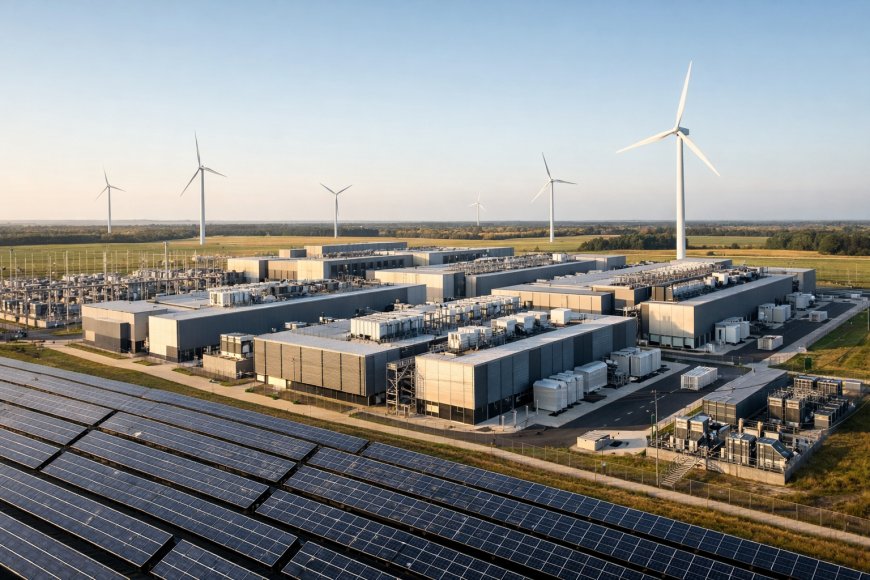
Ahmedabad, Feb. 17, 2026 — The Adani Group on Monday announced a landmark $100 billion investment to build renewable-energy-powered, AI-ready hyperscale data centres across India by 2035 — a move the conglomerate describes as foundational to the country’s technological sovereignty in the artificial intelligence era.
The decade-long initiative aims to create a unified “energy-to-compute” ecosystem linking green power generation, grid infrastructure, and high-density AI processing capacity. The group estimates the program will catalyse an additional $150 billion in allied industries, potentially building a $250 billion AI infrastructure ecosystem within India over the next ten years.
Chairman Gautam Adani framed the commitment as a strategic response to what he called the “Intelligence Revolution,” positioning energy and computing power as the defining resources of the next global transformation.
A National Energy-and-Compute Platform
Unlike conventional data centre expansion plans, Adani’s strategy integrates renewable energy production directly with hyperscale AI compute infrastructure.
The group plans to expand its existing 2 GW national data centre footprint — operated through AdaniConneX — to a 5 GW platform by 2035. This would place India among the largest AI compute hubs globally.
Facilities are expected to feature:
-
High-density AI compute clusters
-
Advanced liquid cooling systems
-
Energy-efficient power architecture
-
Integrated grid resilience systems
-
Dedicated sovereign cloud capacity
The infrastructure is designed to support India’s own large language models (LLMs), government-backed digital programs, and domestic AI startups — reducing reliance on foreign compute infrastructure.
Strategic Global Partnerships
The roadmap builds on partnerships already underway.
AdaniConneX has collaborated with Google to establish what is expected to become India’s largest gigawatt-scale AI data centre campus in Visakhapatnam, along with additional campuses in Noida. Microsoft-linked expansions are planned in Hyderabad and Pune.
The group also confirmed a deeper collaboration with Flipkart to develop a second AI-optimized data centre tailored for high-performance digital commerce and large-scale AI workloads.
Discussions are ongoing with additional global technology firms to anchor hyperscale campuses across India.
Leveraging Renewable Energy Scale
A critical pillar of the strategy is energy security.
AI workloads are increasingly energy-intensive, and data centre growth globally is placing strain on traditional power systems.
Adani Green Energy’s 30 GW Khavda renewable project — more than 10 GW of which is already operational — will serve as a primary power backbone. The group has also committed $55 billion toward expanding renewable capacity and developing one of the world’s largest battery energy storage systems (BESS).
By pairing green energy with compute infrastructure, Adani aims to offer carbon-neutral AI processing capacity — a growing requirement among global tech giants seeking sustainable operations.
Supply Chain Independence
Beyond energy and compute, the investment includes co-investment in domestic manufacturing of critical infrastructure components such as:
-
High-capacity transformers
-
Advanced grid systems
-
Industrial cooling equipment
-
Power electronics and inverters
The objective is to reduce exposure to global supply chain disruptions while strengthening India’s industrial base.
Industry analysts note that semiconductor and AI hardware supply chains remain geopolitically sensitive, making domestic capacity building strategically important.
Alignment with National Policy
The initiative aligns with India’s broader digital and infrastructure policies, including PM Gati Shakti and the government’s push for “Aatmanirbhar Bharat” (self-reliant India).
Adani stated that its internal AI-based industry cloud — already managing renewable energy assets in real time — will expand into logistics, ports and industrial corridors through agentic AI integration.
The goal is to create interconnected smart infrastructure systems powered by domestic compute capacity.
Democratizing AI Access
One notable aspect of the plan is reserving a portion of GPU compute capacity specifically for Indian startups, academic institutions and deep-tech innovators.
India’s AI ecosystem has faced compute shortages, with many companies relying on overseas cloud providers.
By allocating sovereign AI capacity, Adani aims to foster domestic innovation and reduce infrastructure bottlenecks.
The group also plans talent development initiatives, including:
-
AI infrastructure engineering programs
-
Research labs focused on energy and AI
-
National fellowships in AI systems engineering
Economic and Strategic Implications
The scale of the commitment positions Adani among the largest private-sector investors in AI infrastructure globally.
Experts say three structural forces are converging:
-
AI compute demand is accelerating exponentially.
-
Data centre energy requirements are surging.
-
Nations are prioritizing technological sovereignty.
India’s large domestic market, renewable energy capacity, and growing AI developer base make it an attractive location for sovereign infrastructure development.
However, execution risks remain significant. Projects of this scale require regulatory coordination, land acquisition, grid upgrades and long-term capital discipline.
What Happens Next?
The roadmap outlines phased development over the next decade.
Immediate next steps are expected to include:
-
Finalization of hyperscale campus expansion agreements
-
Renewable energy capacity augmentation
-
Groundbreaking for additional AI data centre sites
-
Domestic supply chain investment partnerships
-
Talent development program launches
Regulatory approvals and infrastructure clearances will be critical in early implementation stages.
Industry observers will also monitor whether additional global tech players formally anchor large AI workloads in India as part of the initiative.
A Defining Decade for India’s AI Ambitions
India has long been a software powerhouse but has relied heavily on overseas infrastructure for high-performance compute.
If executed as planned, the Adani Group’s integrated energy-and-compute strategy could significantly reshape India’s role in the global AI economy — transitioning it from a service provider to a compute infrastructure leader.
The announcement signals a new phase in the country’s digital ambitions: not merely building applications, but constructing the physical backbone that powers the intelligence age.